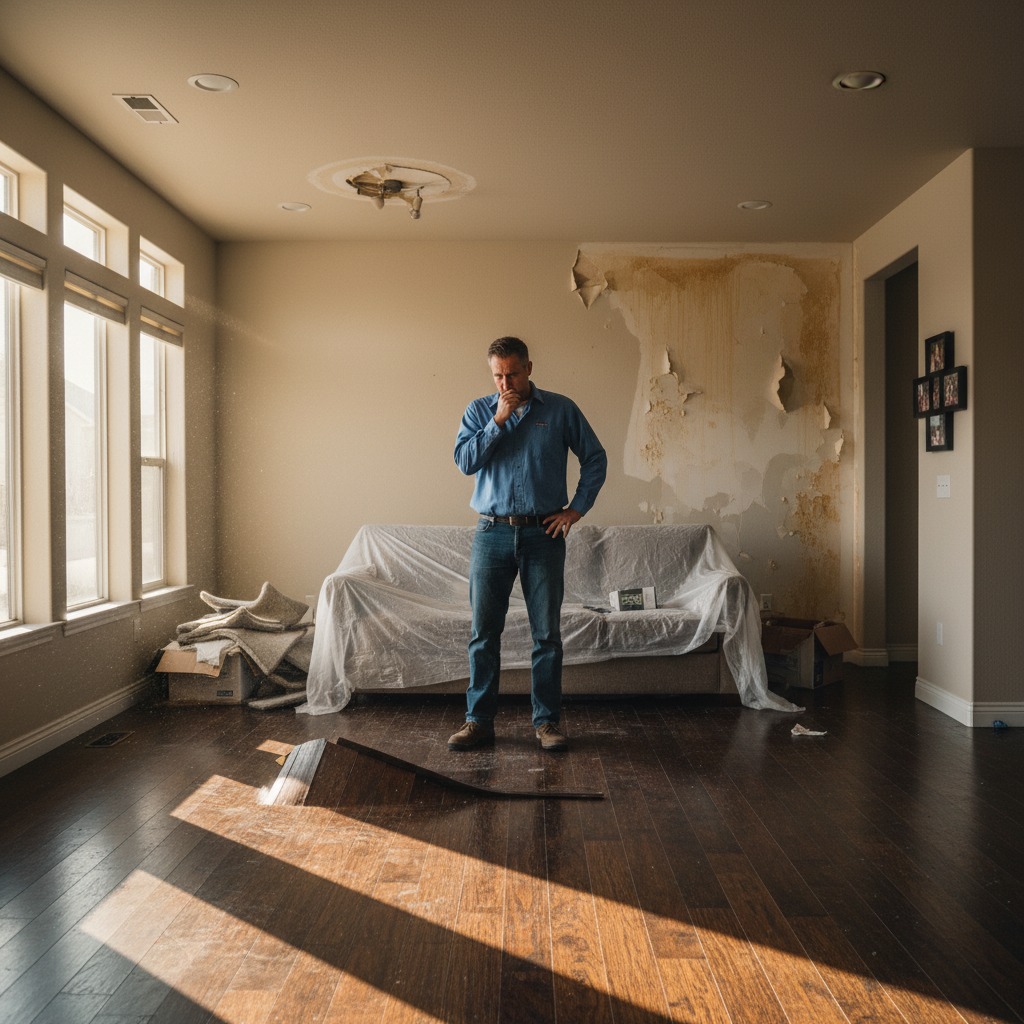
If you're dealing with water damage in your home, one of the first thoughts that usually hits is:
"Alright… how much is this going to cost me?"
And that's a completely fair question.
The tricky part is—there's not a simple, one-size-fits-all answer. Water damage can range from a small cleanup job to a full-scale restoration, depending on how bad it is and how long it's been there.
At Disaster Repair Team, we've helped homeowners all across Utah through situations like this, and while every job is a little different, there are some clear factors that affect the cost.
Let's break it down in a way that actually makes sense.
The Honest Answer: It Depends (But Here's Why)
Water damage restoration costs can vary quite a bit. Two homes could both have "water damage" but end up with very different repair bills.
That usually comes down to a few key things:
- How much water is involved
- How long the water has been there
- What materials are affected
- Whether mold has started growing
- How easy the area is to access
A small leak caught early is a very different situation than a basement that's been soaking for a few days.
Small Water Damage Jobs (Lower Cost Range)
These are the situations every homeowner hopes for.
This might include something like:
- A minor leak under a sink
- A small area of wet drywall
- Water that hasn't spread very far
In cases like this, the job is usually more about drying and minor repairs.
Typically, this type of restoration involves:
- Removing a small amount of water
- Setting up drying equipment
- Monitoring moisture levels
- Minor material replacement if needed
The sooner you catch the issue, the more likely it stays in this category.
Moderate Water Damage (Middle Range)
This is where things get a bit more involved.
Maybe a pipe leaked for a while before it was noticed, or water spread into multiple rooms. At this point, more materials may be affected.
You might be dealing with:
- Wet drywall
- Damaged flooring
- Moisture inside walls
- Insulation that needs to be removed
Restoration at this level often includes:
- Water extraction
- Removing damaged materials
- Drying the structure with professional equipment
- Cleaning and sanitizing
This is also where costs can increase quickly if the damage isn't addressed right away.
Severe Water Damage (Higher Cost Range)
This is the kind of situation no one wants—but it does happen.
Examples include:
- Flooded basements
- Major pipe bursts
- Water damage that sat for several days
- Storm-related flooding
At this level, the restoration process becomes more extensive.
It may involve:
- Large-scale water removal
- Structural drying
- Removing flooring, drywall, and insulation
- Mold remediation
- Repairs and reconstruction
The longer water sits, the more damage it can cause—which is why quick action makes such a big difference.
What Makes the Cost Go Up?
There are a few factors that tend to drive costs higher.
Time
This is the big one.
Water that sits for even an extra day or two can soak deeper into materials, making cleanup more difficult and increasing the chances of mold.
Type of Water
Not all water is the same.
- Clean water (from a pipe or faucet) is the simplest to deal with
- Gray water (from appliances) requires more cleaning
- Black water (like sewage) requires full sanitization and safety precautions
The more contaminated the water, the more involved the cleanup.
Materials Affected
Some materials can be dried and saved. Others can't.
Drywall, insulation, and certain types of flooring often need to be removed once they've been saturated.
Size of the Area
Naturally, a small room is going to cost less to restore than an entire basement or multiple floors of a home.
Will Insurance Cover the Cost?
This is where things can either ease the stress—or add to it.
If the water damage was sudden and accidental, there's a good chance your homeowner's insurance may help cover the cost.
If it was a slow leak or long-term issue, coverage may be limited or denied.
(We actually covered this more in our previous post about insurance and water damage.)
The important thing is to act quickly and document everything if you plan to file a claim.
Why Acting Fast Can Save You Money
If there's one thing we always tell homeowners, it's this:
The faster you deal with water damage, the cheaper it usually is.
Catching a problem early might mean a simple drying job.
Waiting too long can turn it into:
- Mold remediation
- Major material removal
- Full reconstruction
Water doesn't stay in one place—it spreads. And the longer it has to move around, the more damage it causes.
How Disaster Repair Team Helps Utah Homeowners
At Disaster Repair Team, we help homeowners across Utah handle water damage from start to finish.
We know how stressful it is to deal with unexpected damage, especially when you're not sure what it's going to cost or what to do next.
Our team handles:
- Water damage restoration
- Mold remediation
- Storm damage cleanup
- Fire and smoke damage restoration
- Sewage cleanup
We focus on finding the problem, stopping the damage, and getting your home back to normal as quickly as possible.
The Bottom Line
Water damage costs can vary, but the biggest factors are how bad it is and how quickly it's handled.
If you take anything from this, it's this:
- Small problems are much cheaper to fix
- Waiting almost always makes things worse
- Getting professional help early can save money in the long run
If You're Dealing With Water Damage Right Now
If you're currently dealing with water damage and wondering what your next step should be, you're not alone.
Most homeowners don't go through this often, so it's normal to have questions.
Disaster Repair Team is here to help homeowners across Utah figure out what's going on, what it will take to fix it, and how to move forward without the stress.